Tutorials
Software tutorials people can follow
Record the steps once. The zooms land on what you clicked, the cursor stops wandering, and the result is a tutorial rather than a screen capture.


 +1kLiked by 1000s of creators
No credit card required
A tutorial is a sequence of small targets. Click this, type that, notice the thing that changed in the corner. Every one of those is a moment where the viewer needs to be looking at a specific part of a screen that is mostly not that part.
Screen recorders do not help with this. They capture the whole display faithfully and hand you the problem.
Zooms that land where you were working
Prequel records your clicks and keystrokes alongside the picture. When you stop, the editor opens with those moments already grouped into zooms, so the tutorial pushes in on each target as you reach it and pulls back out between them.
You are editing a first draft rather than raw footage. Every generated zoom is an ordinary slice — move it, retime it, delete it, or point it somewhere else entirely.
Two kinds of push, for two kinds of step
A cursor zoom follows the pointer, which is right for a step where you are moving across the interface.
A region zoom holds still on an area you draw, which is right for anything the viewer has to read: a form, a config file, a diff, an error message. A zoom that follows the cursor while someone is trying to read a paragraph is actively worse than staying wide.
There is a third target — whatever you are typing into — for the steps where the interesting thing is the text appearing rather than the pointer.
The cursor itself
At tutorial scale the pointer matters more than it sounds. Prequel draws it in one of four styles, resized so it is still visible after a 2x push, smoothed so it stops skidding, and removed from frame after a few seconds of stillness instead of sitting on top of the thing you just explained.
Export is one MP4, up to 4K and up to 120 frames per second, with no watermark and no upload.
- Record your screen and cameraPick a display, a window or an area you drag out, with your camera, microphone and system audio each on their own track.
- Zooms and layout are applied automaticallyPrequel reads where you clicked and typed, then places the zooms, frames your camera and sets a background behind it.
- Edit, export and shareMove a zoom, trim a clip or fix a caption, then export one MP4 at up to 4K or send a link that plays anywhere.
Zoom and pan
Zooms that follow the action
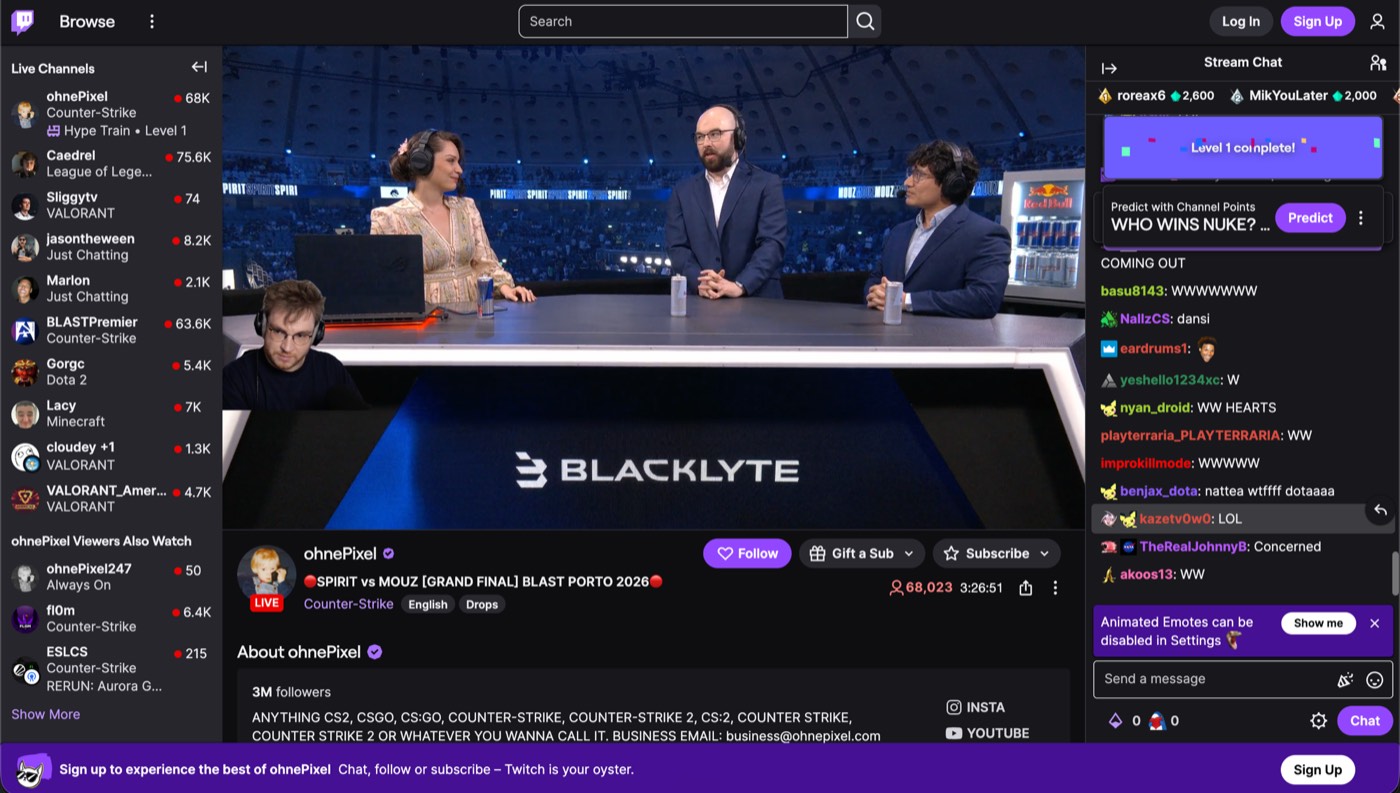
Prequel automatically zooms in when you click or type, then softens the rest of the window so viewers know where to look. Every zoom is added to the timeline, so you can move, retime or delete it at any time.
Layouts
Switch layouts clip by clip
Choose from fourteen layouts for the same take: camera in the corner, beside the screen, split with it or hidden entirely. Use one layout for the whole video, or change it clip by clip.
Subtitles
Subtitles you can edit like text
Prequel transcribes every word on your Mac when the editor opens. Fix captions by typing in the transcript, choose a subtitle style or delete a sentence to remove it from the video.
Thisisthecheckoutweshippedlastweek
Thisisthecheckoutweshippedlastweek
Thisisthecheckoutweshippedlastweek
Thisisthecheckoutweshippedlastweek
Thisisthecheckoutweshippedlastweek
Thisisthecheckoutweshippedlastweek
Thanks so much for jumping on this call
Iwanttoshowyousomethingcool
[pause here]
we’ve been building for the past few months
Teleprompter
A teleprompter that follows your voice
Prequel hangs your script from the notch, just under the camera, and follows your voice — the word you're saying lights up as you say it. Wander off script and it waits for you; skip ahead or fall behind and it catches up within a couple of words.
Instant edit
Start with the edit already done
Prequel records where you click and type, then opens the editor with zooms already placed, a framed camera and a polished background. Spend less time building the first cut and more time fine-tuning.
- Zooms placedOn every click and every burst of typing
- Camera framedShaped, sized and set in a corner
- Background appliedPadding, radius, border and shadow
- Audio balancedMicrophone and system on separate gains
- Cursor cleaned upSmoothed, resized, hidden when it idles
The editor
Everything you would have done by hand
It opens by itself when you stop recording, on the take you just made. Nothing to import, nothing to line up.
Guide attention automatically
Prequel zooms into the part of the screen that matters: the cursor, a region you draw, or whatever you are typing into. Set the level, the speed and how much the rest of the frame blurs.
Look present without taking over the video
Your camera stays framed and out of the way: circle, squircle, rounded, wide or portrait, in any corner and any size. It is never burned into the recording, so none of it is decided while you record.
Make recordings look designed
Add a background, padding and a shadow without editing any of it by hand. Your own wallpaper by default, seven bundled presets, gradients and solids.
Cut the parts nobody needs to see
Trim the pauses yourself, slice by slice, with a waveform under every clip. Layout, background and audio can all change mid-take.
Keep the pointer out of the way
Fifteen pointer styles, resized so the cursor survives a zoom. Smoothed while it travels, and hidden after a few seconds of stillness.
Export the frame you approved
The preview and the exporter draw the same plan, so the file matches what you signed off in the editor.
Quality
Videos stay sharp at 4K
Capture and export run on your Mac's own media engine. 1080p at 60 fps records without dropping frames, and 4K is a setting you pick.
- Resolution
- Up to 4K
- Frame rate
- Up to 120 fps
- Codecs
- H.264 · HEVC
- Encoding
- Hardware, VideoToolbox
- Compositing
- Metal
- Output
- Constant frame rate MP4
Formats
Export in any frame
Turn one recording into different formats without manually reframing every element. Switch from landscape to vertical and the layout stays intact.
- Landscape 16:9
- 4K
- Vertical 9:16
- Square 1:1
- Portrait 4:5
- YouTube
- Shorts
- TikTok
- Reels
- X
Record demos worth sharing
Free for 7 days. No watermark on anything you export.
No credit card required
Curious about the internals? Read the blog
FAQ
Zooms, exports and the rest
How do I record a software tutorial on a Mac?
Pick a display, a window or a dragged region, and start. Prequel records the screen along with your webcam, microphone and system audio, then opens an editor on the take with the zooms already placed on what you clicked. Trim what you fumbled and export one MP4.
Do I have to place the zooms myself?
No. Prequel records where you click and type as it captures, and those moments are clustered into zooms before the editor opens. Every one of them is an ordinary slice afterwards, so moving, retiming or deleting one is the same work as adding your own.
Can I zoom in on a form rather than the cursor?
Draw a region zoom over it. A region is one of three things a zoom can aim at, and it is the one that stays put — which is what a form wants, because the viewer is reading it rather than watching the pointer. Aim at the cursor instead and the frame travels with the mouse.
The cursor is tiny once I export. Can I fix that?
There are four pointer styles and the cursor is resized to survive a zoom. It also leaves the frame after a few seconds of stillness, rather than sitting parked over the thing you are explaining.
Can I record one window instead of the whole screen?
Yes. A window and a dragged region are both capture targets alongside a full display, which keeps the rest of your desktop out of the tutorial without cropping it back out afterwards.
Can I just use QuickTime for this?
For a plain screen capture, yes. What QuickTime will not do is record your camera in the same pass, capture system audio without a virtual audio driver, or push in on what you are doing — all of which are the difference between a screen capture and a tutorial someone can follow.
What do I need to record a software tutorial?
An Apple Silicon Mac running macOS 14 or later and the Screen Recording permission. Accessibility is optional and only feeds the zooms that follow what you type.