Editing
Layout
Where the screen and the camera sit in the frame.
Choosing a layout
The Layout panel offers arrangements in three groups.
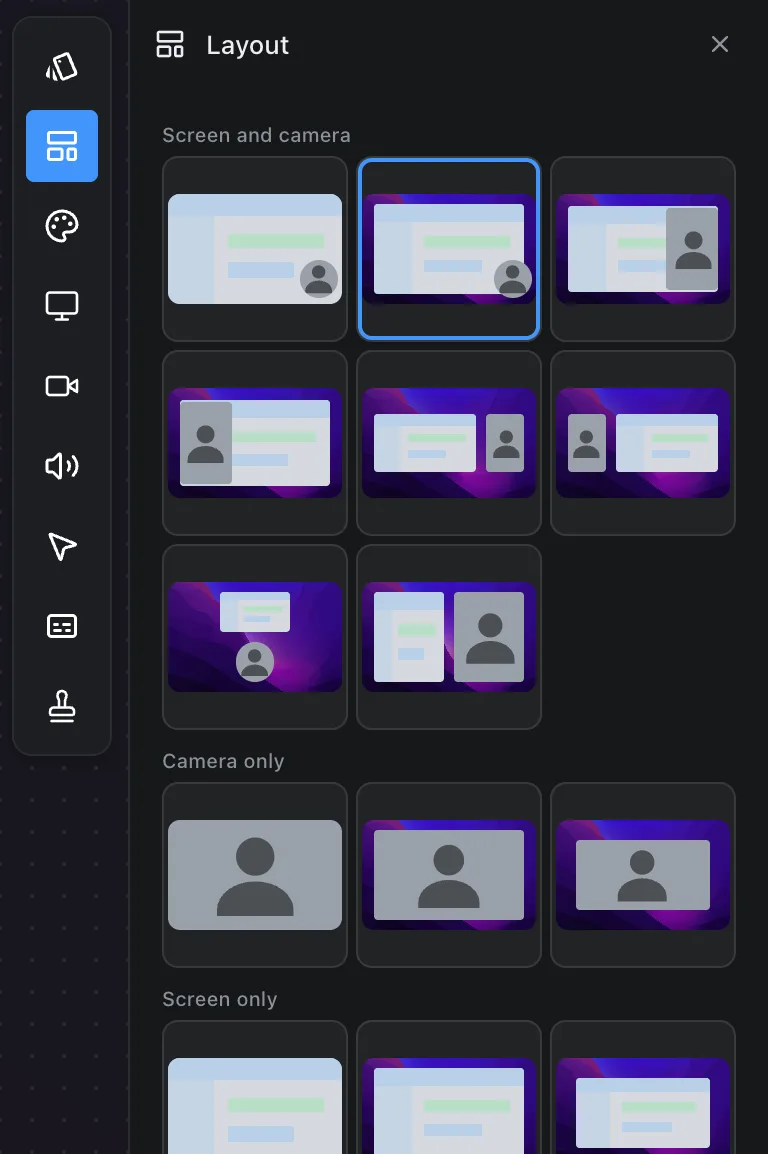
Screen and camera
- Full screen, camera over
- Padded screen, camera over
- Padded screen, camera standing over its right end
- Padded screen, camera standing over its left end
- Screen and camera side by side, camera at the right
- Screen and camera side by side, camera at the left
- Screen above the camera
- Split down the middle
Camera only: full frame, padded, or standing further back.
Screen only: full frame, padded, or standing further back.
A fresh recording opens on Padded screen, camera over. Layouts that need a landscape frame are unavailable in a vertical one.
Arranging by hand
Everything in the composition can be moved. Click the screen or the camera to select it, then drag to move it or use the corner handles to resize. Guides snap it to the frame's centre and edges.
- Hold Option while dragging to pan the picture inside its own box rather than moving the box.
- Hold Shift while resizing to constrain the proportions.
- Esc clears the selection.
Once you have dragged something, the layout reads Custom, dragged by hand. Choosing a preset again snaps everything back.
Per clip
Select a clip on the timeline before choosing a layout and it applies to that clip alone, so a take can open on the camera and cut to the screen. See the note on overrides in The editor.
Frequently asked questions
- Can the camera be somewhere other than the corner?
- Yes. Pick a layout, or click the camera in the composition and drag it anywhere. Snap guides line it up with the frame's centre and edges.
- Can I show only the camera for part of the recording?
- Yes. Select a clip on the timeline first, then choose a Camera only layout. It applies to that clip alone.
- Why are some layouts greyed out?
- They need a frame wider than it is tall. Switch the frame to a landscape preset and they become available.